This is a collection of general tips and recommendations for visiting Korea, mainly Seoul, but also a few other cities. If you are planning to attend ICML2026, this may be the perfect starting guide for you!
Let's dive into it!
1. Important Tips to Keep in Mind
First things to get at the airport
- T-money card (티머니카드): the transport card you'll use on metropolitan public transport (buses and subway). You can buy and recharge it at almost any convenience store, GS25, CU, or 7-Eleven. When you tap it on public transport, you can immediately see the remaining balance.
- SIM card: if you don't have an eSIM, you can pre-order a physical SIM and pick it up at the airport. One reliable provider is Chingu Mobile (친구모바일).
- Some cash, particularly useful if you're planning to visit markets, although you'll be able to pay by card almost everywhere else.
Apps you need to download!
Most of the apps you're used to either don't work well (Google Maps) or aren't widely used in Korea (Uber). For day-to-day life, you'll want to rely on apps from Kakao (카카오) or Naver (네이버):
- Maps: use Naver Maps or Kakao Maps. I personally always used Naver Maps and found it extremely convenient: it gives you routes, public transport options, and corresponding costs, exactly like Google Maps would.
- Taxi: while Uber works, I recommend Kakao T (카카오 T), wider coverage, faster pickups, and generally considered the better option in Korea.
- Translator: Papago (파파고, by Naver) is considered better than Google Translate for Korean. The app is incredibly handy and can accurately translate from photos. Highly recommended!
Essential Korean expressions
Most people in Seoul will understand at least some English, but not always. It helps to know a few basic phrases and to keep Papago ready for quick translations. At minimum, try to learn:
- Annyeonghaseyo (안녕하세요), hello.
- Kamsahamnida (감사합니다), thank you.
≽^• ˕ • ྀི≼
2. General Recommendations
Food
Korean food is amazing, and eating out for dinner is extremely popular. Prices are generally reasonable, which means you can try as many things as possible during your stay.
You absolutely have to try:
- Korean BBQ (고기구이)
- Kimchi jjigae (김치찌개), my favorite Korean dish. If you like stews, explore the broader family of jjigae (찌개) in general.
- Bibimbap (비빔밥) and kimbap (김밥), the classics.
- Korean fried chicken (치킨).
- For dessert: bingsu (빙수), super delicious!
For street food, the staples are:
- Tteokbokki (떡볶이), the one and only.
- Hotteok (호떡), sweet stuffed pancakes.
- Eomuk (어묵), fish cake.
A few specific recommendations
- Korean BBQ all-you-can-eat in Hongdae (홍대), Naver Maps link.
- For many tasty variations of tteokbokki: Dukki (두끼), multiple locations.
- Best vegan restaurant in Itaewon: map link.
- Myeongdong (명동) shopping street, map link. Filled with street food stalls.
- Markets: the most famous one is Gwangjang Market (광장시장), but I also highly recommend Namdaemun Market (남대문시장). You'll find the best hotteok of your life there, look for this stall. :)
Transport between cities
I recommend buying inter-city tickets at the station or on the official websites to save money:
- Trains: letskorail.com
- Buses: kobus.co.kr, txbuse.t-money.co.kr, bustago.or.kr
There are two main types of trains: KTX (케이티엑스) and Mugunghwa (무궁화호). KTX trains are much faster but cost roughly twice as much as Mugunghwa. Buses take about the same time as Mugunghwa trains and cost roughly the same. If you're only here for a short stay, KTX is often worth it for the time saved, but buses can also be very convenient, since they often offer direct routes between cities that would otherwise require a transfer by train.
The bus booking websites can be tricky to navigate, and some tickets aren't even reservable online. In that case, I recommend going to the bus station a couple of hours early and booking in person.
Cultural etiquette
Koreans are extremely respectful of public spaces. Please reciprocate: avoid loud noises on public transport, leave reserved seats free for the people they're meant for.
Must-do activities
- Korean BBQ
- Street food
- Photocards (a quintessentially Korean photobooth experience)
- Karaoke
- Cute cafés
- Check out the historical sites
On karaoke specifically: you'll find both standard karaoke rooms, noraebang (노래방), and coin noraebang (코인노래방), small singing booths where you pay per song or in short, low-cost time chunks rather than renting a whole room by the hour. I usually go to coin noraebangs and highly recommend them!
3. Seoul Recommendations
Areas worth exploring
Gangnam (강남)
The conference will take place in Gangnam, which is a cool and modern area, though not particularly touristy, unless you're looking to get cosmetic surgery done. The main spots worth visiting in Gangnam are:
- The iconic Gangnam Style statue, right next to the Coex Mall (코엑스).
- Bongeunsa Temple (봉은사), my favorite temple in Seoul by far!
- K-Star Road (케이스타로드), interesting if you're into K-pop, although honestly a bit underwhelming in my experience.
Itaewon (이태원) and Seongsu (성수)
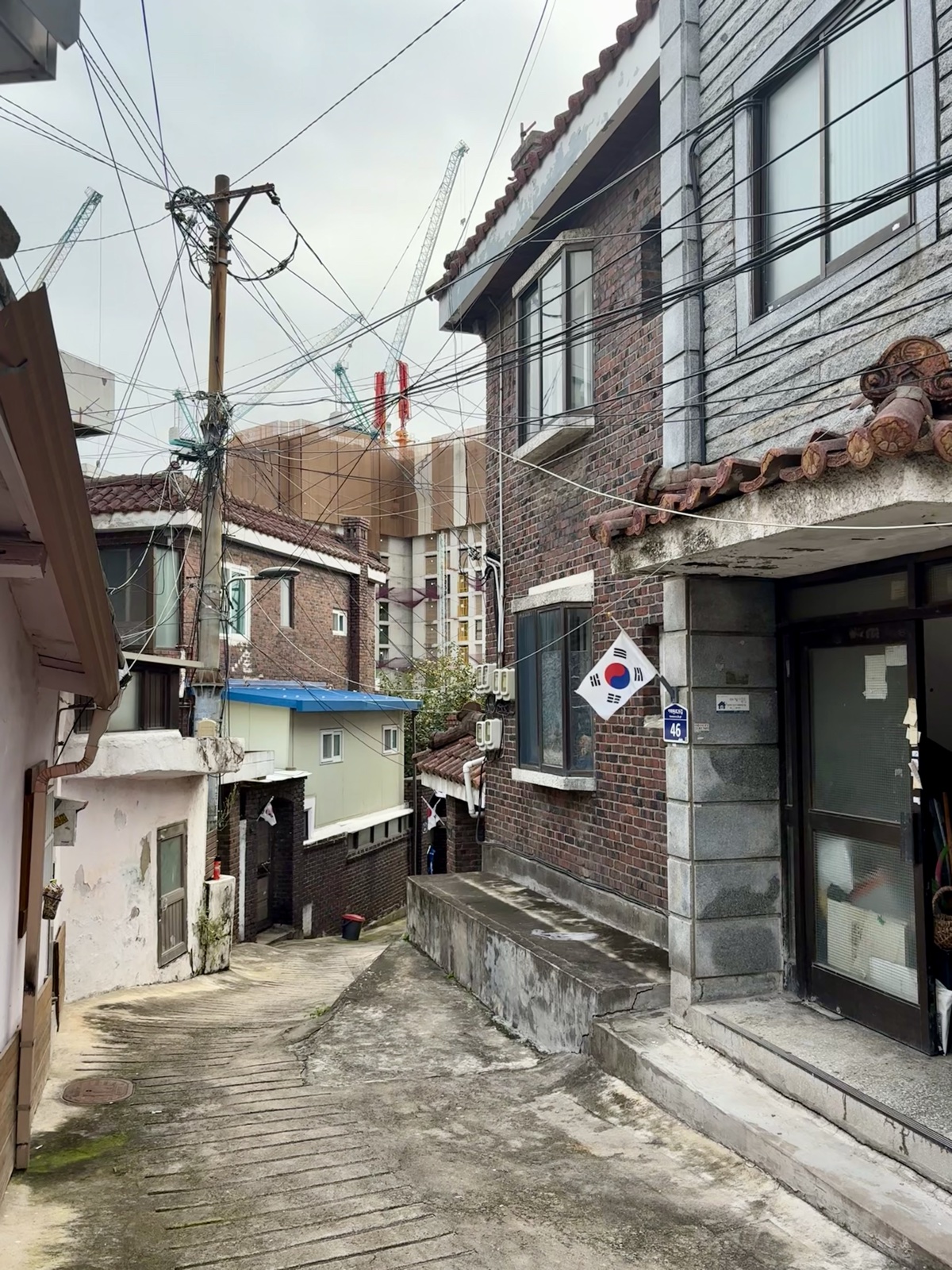
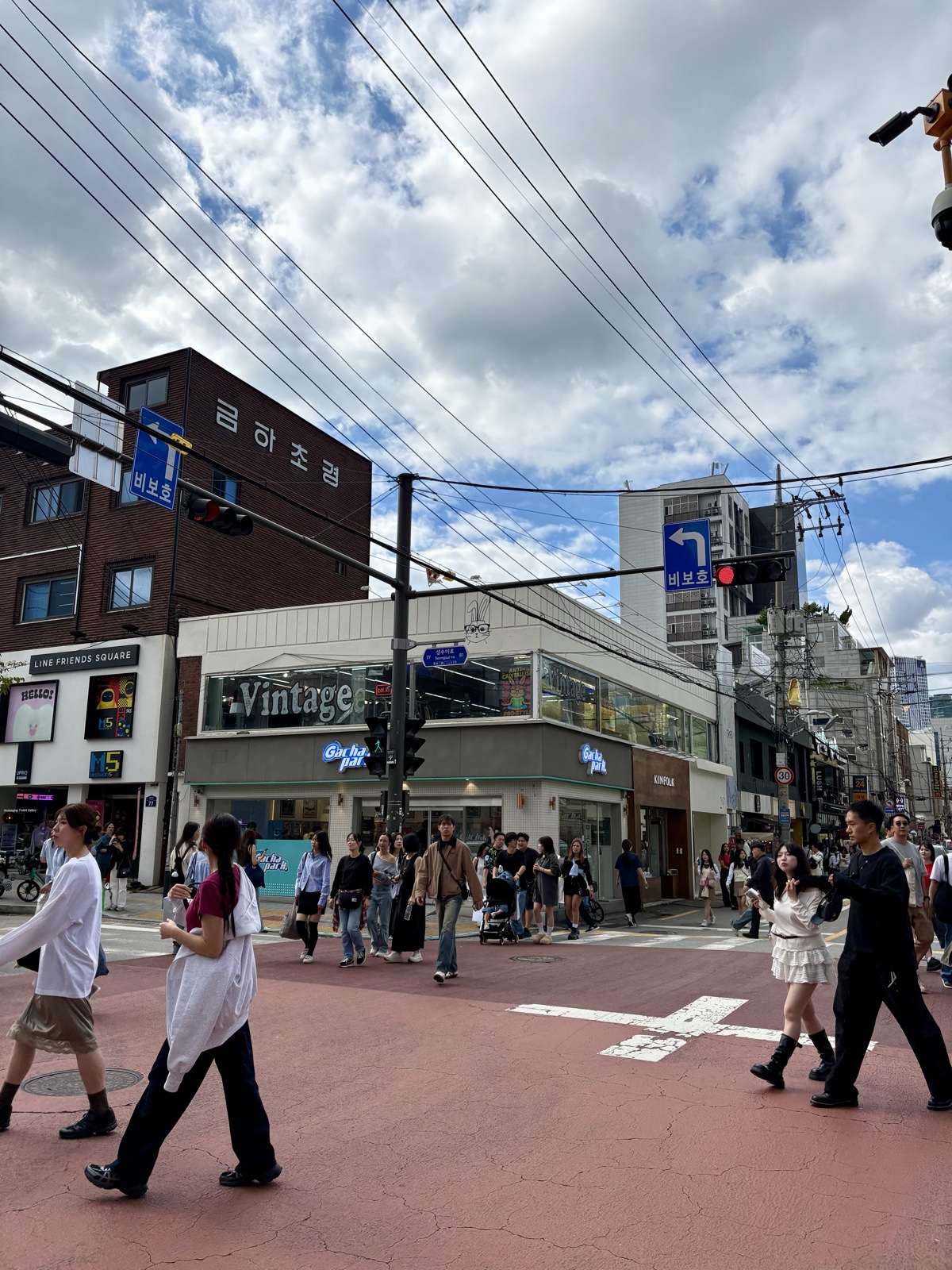
These are my two favorite Seoul neighborhoods at the moment, and they represent two distinct, vibrant sides of the city. Itaewon is the historically diverse, energetic, nightlife-heavy international hub; Seongsu is currently the trendiest "industrial-chic" district, known for transforming old warehouses into creative cafés, pop-up stores, and fashion boutiques. They are less touristy than other parts of Seoul, and it's lovely to simply walk around and soak in their atmosphere.
Near Seongsu, you'll also find Seoul Forest (서울숲), a beautiful park well worth a visit.
Hongdae (홍대)
A vibrant, youth-centric hub near Hongik University (홍익대학교), known for indie art, street performances, and nightlife. And shopping, so many shops! In Hongdae, I mostly recommend walking around and enjoying the vibe.
Jongno (종로)
The heart of historic Seoul, characterized by traditional hanok (한옥) houses, royal palaces, and a quieter, cultural charm. My Jongno recommendations:
- Insa-dong (인사동) and Ikseon-dong (익선동) are two adjacent historic neighborhoods in Jongno-gu (종로구) with different atmospheres. Insa-dong is famous for art galleries, traditional craft shops, and tea houses. Ikseon-dong is a trendier area with narrow alleys packed with modern cafés and restaurants tucked inside renovated hanok houses, my favorite hidden gem!
- The royal palaces. Take a guided tour at Changdeokgung (창덕궁) to see the Secret Garden!
- Jogyesa Temple (조계사).
- Bukchon Hanok Village (북촌한옥마을), extremely touristy, but if you're going to do it, do it. :)
Myeongdong (명동)
I mentioned this above for the street food, but Myeongdong is also famous for its skincare shops, and shopping in general. Get ready for extremely chaotic streets!
Other spots
- N Seoul Tower (Namsan Tower) (N서울타워), the symbol of Seoul. I recommend going up in the evening (with cable car) if the view is clear for a special atmosphere, or hiking to the top during the day through Namsan Park if the weather is nice. Totally worth it!
- Dongdaemun Design Plaza (DDP) (동대문디자인플라자), an aesthetic plaza with an exhibition center inside. :)
- The Han River parks (Hangang parks, 한강공원) are perfect for picnics during the day, or water and light shows at night. Worth checking which ones are running shows during your visit, one to start with is the Banpo Rainbow Fountain (반포대교 무지개분수).
- Less popular gems near Jongno-gu: Dongmyo (동묘) for vintage and second-hand markets, and Ihwa-dong Mural Village (이화동 벽화마을), I loved it!
What to do when it rains (or gets too hot)
- Dongdaemun Design Plaza (DDP), they have super interesting permanent and temporary exhibitions.
- National Museum of Korea (국립중앙박물관). Personally I didn't find it especially exciting, but it's worth a visit once. :)
- Take an amazing dance class at the 1MILLION Dance Studio.
- Spend some time in a noraebang or a cute café!
Nightlife
For nightlife, I recommend Hongdae and Itaewon, though I'd say Hongdae clubs feel more internationally friendly. My recommendations:
- International Club. I know it's literally called International. I know the Google rating is 1.5. But you should go for the vibe, trust me. They play Korean and international hip hop.
- Ocean Club, EDM. Bring earplugs!
- Honestly, just explore the Hongdae street where International and Ocean Club are located, other clubs along it may also be a great time. :)
Shopping
- Skincare: Myeongdong, or any Olive Young (올리브영).
- Clothes: Hongdae for Korean-style clothing, Dongmyo for second-hand.
- Make-up: again Myeongdong, but I highly recommend checking out the Tirtir (티르티르) shop in Seongsu for personalized foundation. It was a cool experience!
Cafés
See the food section above for restaurants. For cafés, there's a bit more to say. You'll find plenty of affordable franchise chains, MEGA (메가커피), Paik's Coffee (빽다방), Ediya Coffee (이디야커피), but Koreans also love themed and atmospheric cafés, which are very much worth exploring. A couple I enjoyed:
Honestly, plenty of the cafés in Hongdae and Seongsu are some of the cutest you'll ever see. :)
4. Other Cities
Here's a quick list of other cities I'd recommend if you have time beyond Seoul. I won't go into detail on every one, just a few notes and pointers.
The top picks (for a few extra days)
If you have some extra days, the must-visit cities are Busan (부산), Jeonju (전주), and Gyeongju (경주). Plenty of great recommendations exist online for these (or feel free to ask me!).
One Busan-specific tip: definitely visit DUF, possibly the best café I have ever been to in my life.
If you have even more time
Consider Suwon (수원), Andong (안동), or Daejeon (대전).
Or, if you are more interested in natural explorations, I would suggest one of:
- Seoraksan National Park (설악산국립공원), for the most amazing hiking. You could combine it with some exploration of the east coast, including Sokcho (속초) and Gangneung (강릉) (and a bit of surfing, if you'd like!).
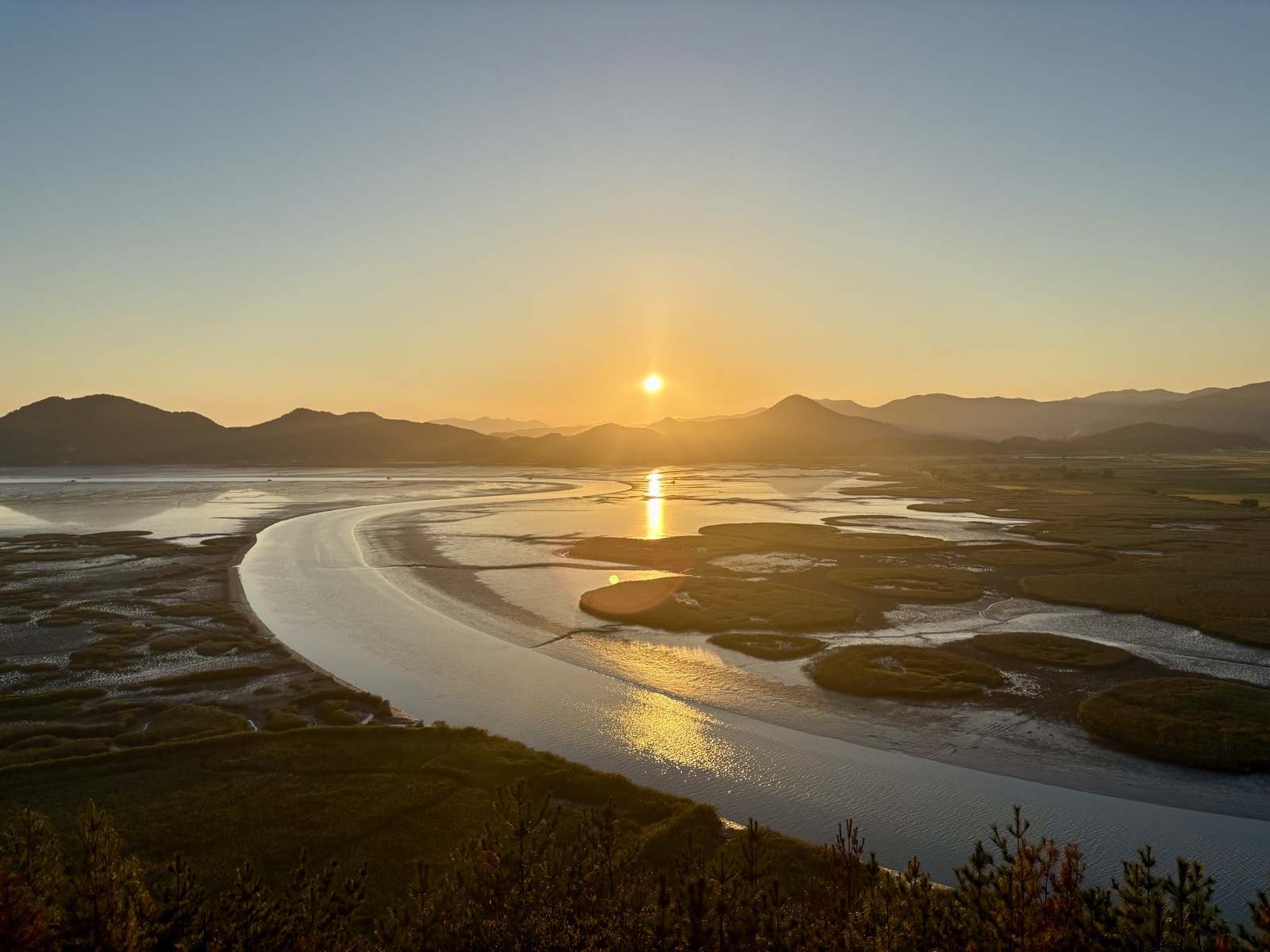
- The Suncheon (순천) area, full of hidden gems and characterized by a wonderful wetland landscape.
Daejeon and Suncheon are not on the usual tourist routes: Daejeon because it's simply not a touristic city, and Suncheon because what's interesting there is not the city itself but the niche natural and historical sites scattered across the surrounding region. For this reason, I'll share a few personal less-touristic recommendations for each below.
Daejeon (대전)
Daejeon has a special place in my heart because it's where I lived. If you pass through, make sure to visit:
- KAIST campus (카이스트), my Korean home, and honestly very cool in my opinion. Say hi to the geese!
- Hanbat Arboretum (한밭수목원), the largest man-made urban arboretum in Korea! Plus the surrounding Expo area.
- Uam Historical Park (우암사적공원).
- Sungsimdang (성심당), the legendary bakery of Daejeon and probably the most famous in all of Korea. You cannot miss it!
Suncheon (순천)
If you decide to pass by Suncheon (great choice!), make sure to check out these gems:
- Nagan Eupseong Folk Village (낙안읍성 민속마을).
- Suncheon Bay Nature Reserve / Wetlands (순천만습지).
- Suncheon Bay National Garden (순천만국가정원).
5. Closing Thoughts
Thank you for reading all the way down! I hope this guide helps you enjoy your stay in this fascinating country, and that you fall in love with it even half as much as I have. Enjoy your time there, and don't hesitate to reach out for further recommendations or questions. I'm always happy to chat about Korea. :)